
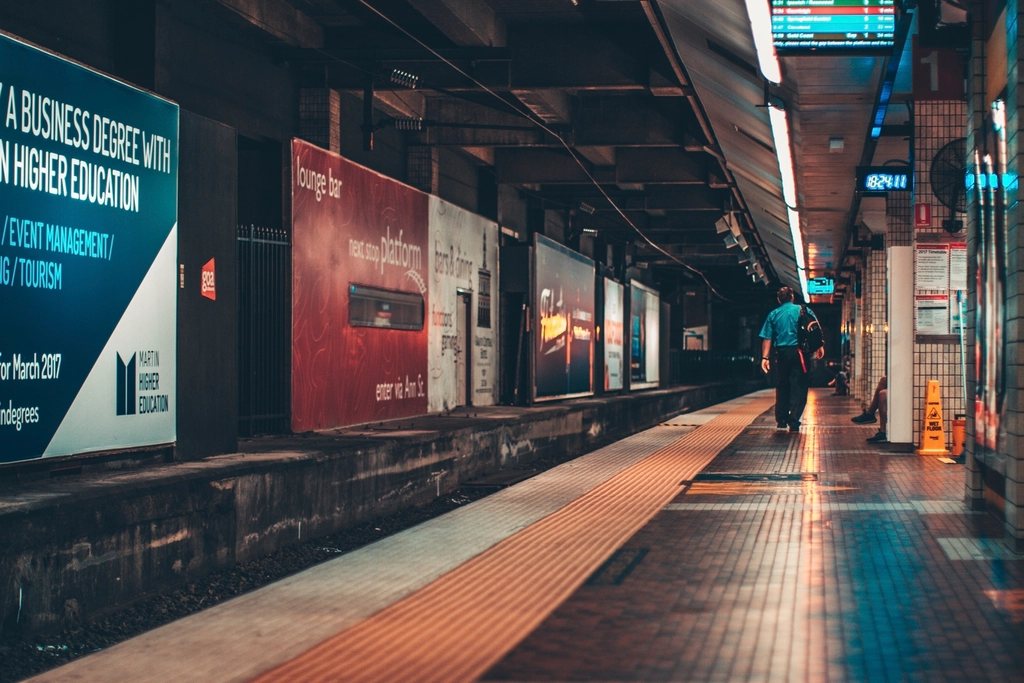
The train is the natural way to arrive for a slow week in Somerset. The main line from London runs through Castle Cary and Taunton, the line from the north comes down through Bristol to Weston and Bridgwater, and from any of those stations a bus, a taxi or a B&B owner with a car will get you the last few miles into the hills. What puts people off is the fares. British rail ticketing is famously baroque, and the same seat on the same train can cost three different amounts depending on when and how you bought it. The system does make sense, though, once you know its four or five moving parts.
The three basic kinds of ticket
Almost every fare in Britain falls into one of three families, and the name on the ticket tells you which.
Anytime tickets are fully flexible. You can travel on any train, at any time of day, on the date shown, and a return is valid for a month. They are also the most expensive, sometimes startlingly so on a weekday morning into a city. Think of them as the price of not planning.
Off-Peak and Super Off-Peak tickets are flexible within limits. You can take any train that runs outside the busy periods, which usually means not the weekday morning rush into a city and, on some routes, not the late afternoon rush out of it. The restrictions vary from route to route and are printed on the ticket or shown when you buy. For a countryside holiday, where you are likely to travel mid-morning on a weekday or at the weekend, an off-peak fare is often all you need.
Advance tickets are the cheap ones. They are valid on one specific train only, are sold as singles, and are released in limited numbers, generally up to about twelve weeks before the day of travel, with the cheapest tiers selling out first. Miss the train you booked and the ticket is worthless, though most operators will let you change the date or time before departure, sometimes for a fee, sometimes free. Buy two singles, one out and one back, and you have a very cheap return if you are sure of your plans.
Buying at the right moment
The trick with advance fares is that they are cheapest when they first appear and climb as the train fills. For a holiday booked a couple of months out, look for them as soon as the B&B is confirmed. For a trip next week, they are often still available, especially for journeys to the West Country outside summer, but the lowest tier may be gone. Some operators also sell advance fares on the day, right up to a few minutes before the train leaves; it is always worth a look.
Book through any of the industry-wide journey planners or the operators’ own sites, which all sell the same tickets at the same regulated prices. The only thing to watch is booking fees, which some third-party sellers add and the operators generally do not. A paper ticket from the machine at the station, an e-ticket on your phone or a collection at the barrier all work the same way.
Railcards
If you make more than one long journey a year, a railcard almost certainly pays for itself. These are annual discount cards, sold for a modest fee, that take roughly a third off most fares, including advance fares, for the holder and often a companion. There are cards for people aged 16 to 25, for those aged 26 to 30, for those over 60, for two named adults travelling together, for families with children, for disabled passengers, for veterans and for the network of lines around the south-east. A single return from London to Taunton with a card can save more than the card costs.
The catch, and there is one, is that most cards do not apply to the very cheapest tickets in the weekday morning peak, and some carry a minimum fare in that period. Outside the peak, and at weekends, they apply almost universally. Buy the card before you buy the tickets, because the discount is applied at the point of sale, and carry it with you: a ticket inspector will ask.
Split tickets, and why they are allowed
Here is the part that feels like a trick but is not. Because fares are set route by route, and because the price of a journey is not always the sum of its parts, it is sometimes cheaper to buy two or more tickets covering successive sections of the same trip than one ticket for the whole. A journey from London to Taunton, for example, might cost less as London to Castle Cary plus Castle Cary to Taunton, all on the same train, than as a single through fare.
This is explicitly permitted by the conditions of travel, with one rule: the train must actually stop at the station where your tickets meet. You do not have to get off; you just cannot split at a station the train passes through without stopping. The saving is sometimes trivial and sometimes a third of the fare, and there are a number of websites that will do the sums for you, usually for a small share of the saving.
A few things that catch visitors out
- A return on a long-distance off-peak ticket is often only a little more than a single, so check both before buying two advances.
- Seat reservations are free and included with advance fares; on off-peak and anytime tickets they are optional but worth making on a Friday afternoon or a bank holiday.
- If your train is delayed by more than a set threshold, typically fifteen or thirty minutes depending on the operator, you can claim part or all of the fare back afterwards through the delay compensation scheme. Keep the ticket.
- Bicycles travel free on most trains but usually need a reservation on long-distance services, and the spaces are few.
- Dogs travel free, on a lead, and are welcome in the carriage but not on the seats.
The slow traveller’s approach
A simple routine works well. Decide the dates, book the accommodation, then buy advance singles for the long legs as early as possible, with a railcard, and leave the short local hops on the branch lines to be paid for on the day, where the fares are low and the difference is pennies. Travel mid-week where possible, mid-morning where not, and sit on the right-hand side heading west from London, because the view north across the Levels towards Glastonbury Tor, somewhere between Castle Cary and Taunton, is the moment the holiday begins.
Read next: Wells, Somerset: Cathedral, Market Place and Where to Sleep