
Wells is compact enough to cover on foot and old enough that almost every street corner has a story attached. This guide explains how to reach it, how to spend a short visit around the cathedral and the market square, and what to think about when choosing a bed for the night.
- There is no railway station, so plan your arrival by car, coach or bus.
- The cathedral, the Bishop’s Palace and the market square sit within a short stroll of one another.
- Inns in the centre offer atmosphere and a short walk to everything; parking is the thing to check first.
How do you get to Wells without a railway station?
Most people arrive by car, with the A39, A371 and A303 all leading towards the city. If you would rather leave the driving to someone else, long-distance coaches run to Wells, including a direct service from London, and local buses connect it with neighbouring towns and cities.
Flying in is possible too. Bristol Airport is the nearest, and a hire car from there gets you to Wells in a little over half an hour, according to one recent visitor account.
Planning your arrival
Whatever the mode of transport, tell your host roughly when you expect to arrive. Historic buildings in the centre often have limited parking, narrow approaches and no reception desk staffed all day, so a short message in advance saves a good deal of circling and waiting.
What is there to see in a small city?
The pleasure of Wells is its scale. The city is easy to navigate on foot, and many of its main sights are a short walk from the Market Place. It is often described as England’s smallest city. In fact, it is second to the City of London in both area and population, though unlike London it is not part of a larger built-up area. At the 2021 census, the built-up area held a little over 12,000 people.
The cathedral and its surroundings
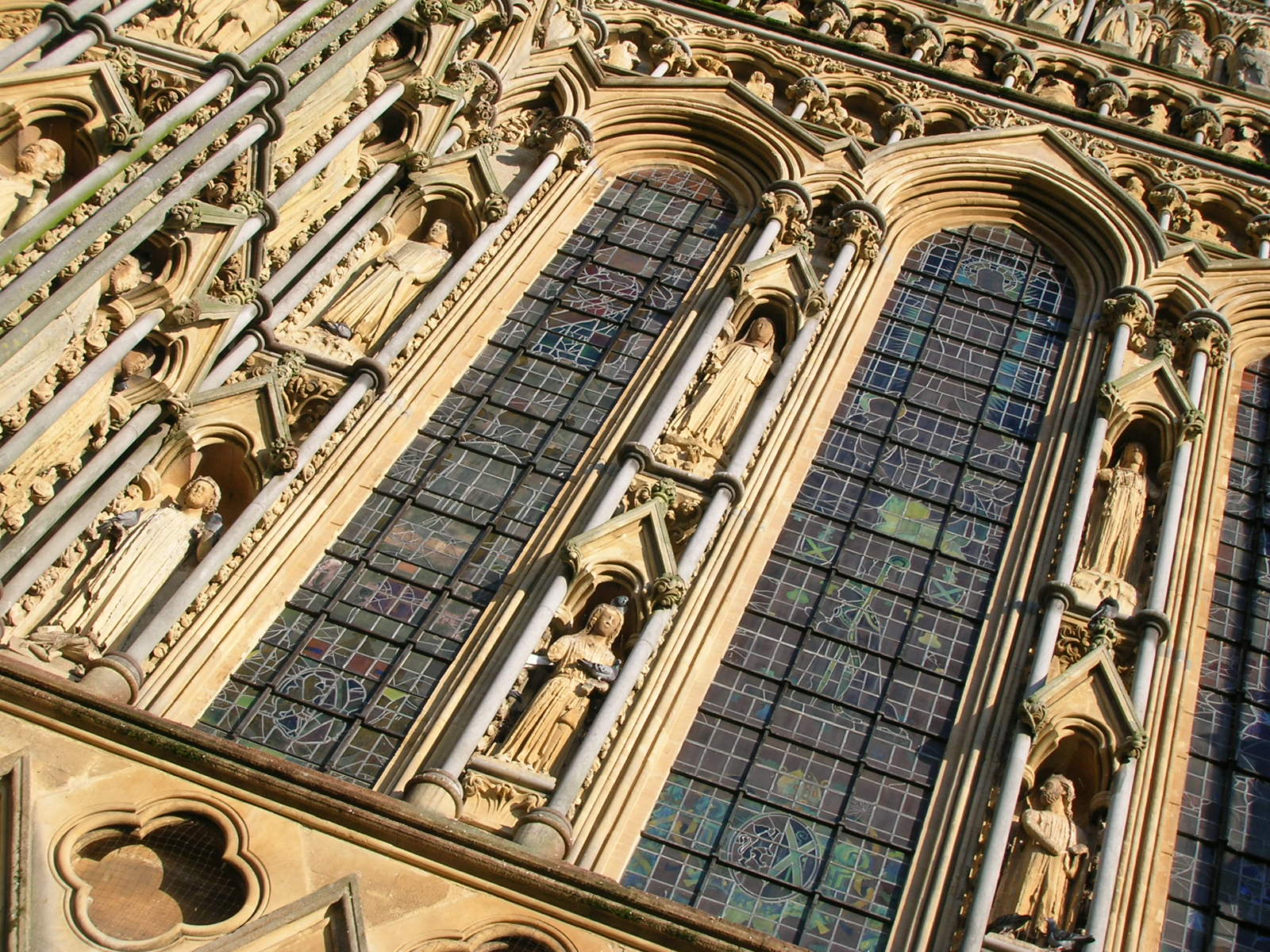
The present cathedral dates from the early 13th century, and the Bishop’s Palace was built in the same period. The palace is still the home of the Bishop of Bath and Wells. Stand on the wide Cathedral Green before going in: the west front, crowded with carved figures and arches, rewards a slow look. Inside, the 14th-century clock is worth timing your visit around, since it performs best on the hour.
The city takes its name from three holy wells dedicated to Saint Andrew. Two lie in the grounds of the Bishop’s Palace and one is in the Market Place, and water from the palace wells still feeds the fountain at the bottom of the square.
Layers of history
The story here is not only a quiet one. During the Civil War the city was ringed by Parliamentarian guns, and soldiers later stabled horses in the cathedral. Decades afterwards, rebels in the Monmouth Rebellion damaged the west front. If you look closely at the sculpture, it is worth remembering how much has survived.
- Allow time for the cathedral interior and the clock.
- Walk the Market Place down to the fountain and look for the water channels in the paving.
- Keep an eye out for film locations; the city has been used for many productions.
Is market day worth planning around?
Wells has held market rights since the Middle Ages, and the tradition continues, with lively markets held twice a week in and around the Market Place. For a visitor, market days add noise, colour and local produce, but they also mean busier streets and tighter parking, so decide whether you want the bustle or a calmer wander.
The same square is lined with independent shops, cafes and old inns, and the surrounding streets are narrow and varied in style. In autumn the city hosts a food festival celebrating Somerset produce, which may suit you if you are building a trip around eating.
A note on the old inns
Some of the buildings on the square began life as coaching inns. One of them is believed to date from around 1450, and a recent visitor account says that on market days a great many horses were once stabled behind it. That heritage is part of the appeal of sleeping in the centre, since the layout of arch, yard and bar still shapes how these places feel today.
Where should you stay for a night or two?
The right bed depends on what you want from the visit. A coaching-inn style stay in the centre puts the cathedral and the Bishop’s Palace within a couple of minutes’ walk, and at least one such inn describes a short stroll to both. You can eat and drink on the doorstep and walk everywhere, which suits a one-night visit with no car in daily use.
A farmhouse or barn a few miles out trades that convenience for quiet, a garden and space, and gives you a base for the Mendip Hills, which begin on the southern edge of the city. This suits longer stays, walkers and anyone who is driving anyway.
Questions to ask before you book
- Is parking on site, and is it limited? Ask whether a space can be held for you.
- What time can you check in, and who will meet you if you arrive late?
- Is it a market day during your stay, and does that affect access or noise?
- If you drive an electric car, is charging available?
Booking ahead is sensible for weekends and festival periods, when a small city has a limited supply of rooms. A direct message to the host about parking and arrival time often settles more than the listing does.
Frequently asked questions
Is Wells really England’s smallest city?
It is usually described that way, and it is the smallest in area and population apart from the City of London. Unlike London, it is not part of a larger urban area, which is why the title is often given to Wells.
How long do you need in Wells?
A day covers the cathedral, the Market Place and the Bishop’s Palace on foot. One or two nights lets you see them without rushing and leaves time for the surrounding countryside.
Do you need to book accommodation in advance?
It is wise, especially for weekends and event periods. Ask about parking and arrival time when you book, since central buildings often have limited space.
Related reading
- Murphy Bed Hardware Kits: A Guide for B&B Owners
- Forty Rooms Later: What a Good B&B Bedroom Actually Needs
Sources
- Visiting the historic city of Wells, Somerset (ourworldforyou.com, accessed 2026-11-02)
- Wells in Somerset – England’s Smallest City (beanacrebarn.co.uk, accessed 2026-11-02)
- Wells, Somerset — Wikipédia (en.wikipedia.org, accessed 2026-11-02)
Photo: Wells cathedral, west front 1, by Tony Grist, Public domain (Wikimedia Commons)