
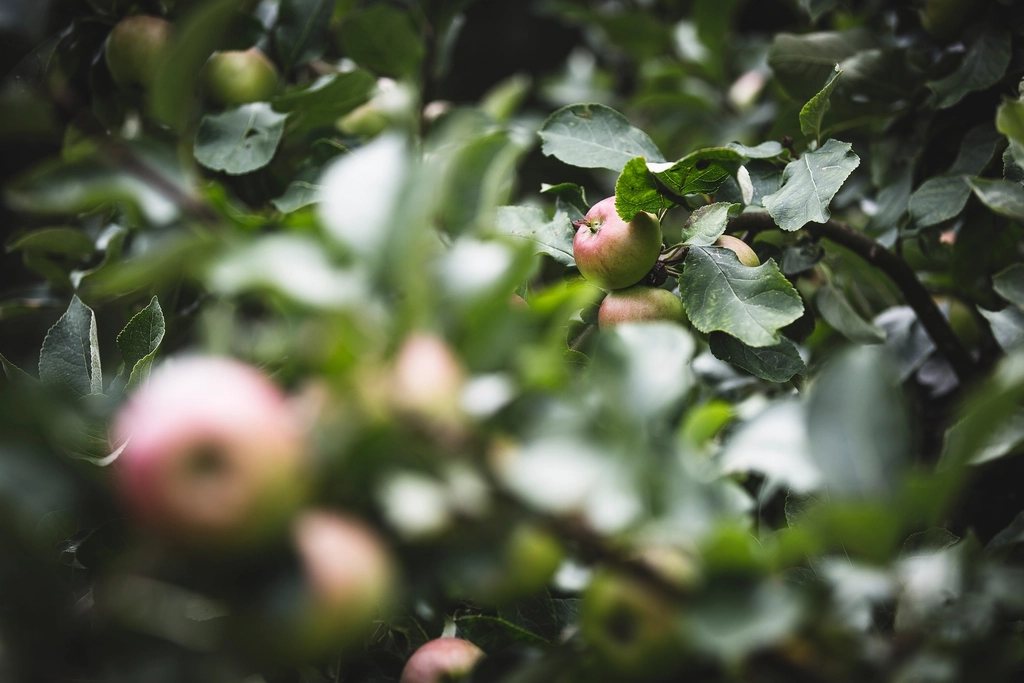
Somerset and Herefordshire are the two great cider counties of England, and of the two, Somerset is the one where the drink still feels like part of the furniture rather than an industry. Drive the lanes of the Vale of Taunton Deane in October and you will pass orchards where the grass is red with windfalls, gateways with a hand-painted sign and an honesty box, and the occasional barn door standing open on a row of oak barrels. This guide explains what the words on the barrel actually mean.
Four families of apple
The first thing to know is that cider apples are not eating apples. Most are small, hard and unpleasant raw, and they are grouped by two qualities: how much acid they carry and how much tannin. Sharp apples are high in acid and low in tannin; sweets are low in both; bittersweets are low in acid and high in tannin; bittersharps are high in both. A balanced cider is usually a blend, but Somerset’s reputation rests on the bittersweets, which give body, colour and that dry, faintly astringent finish that leaves the mouth clean. The county’s own varieties have names that sound like a village cricket team: Kingston Black, a bittersharp prized for single-variety cider; Dabinett and Yarlington Mill, the reliable bittersweets; Somerset Redstreak; Harry Masters Jersey. Many were raised on farms in the Vale and around Glastonbury in the nineteenth century, and the old research station near Bristol spent much of the twentieth century sorting them into the classes we use today.
The year in an orchard
A cider orchard keeps its own calendar. Blossom comes in May, later than for dessert apples, and a frost in that fortnight can take most of the crop. The fruit hangs through summer and is not picked but shaken or allowed to fall, from late September into November, because a cider apple is at its best when it has dropped. The apples are milled to a pulp, the pulp is built into a pressing cheese wrapped in cloth, and the juice runs off into a vat or a barrel. Fermentation begins with the wild yeasts on the fruit, and in a cold barn it runs slowly through the winter, which is one reason farm cider tastes so different from the tank-made kind. By spring it has usually finished, and it is drunk through the summer and the following harvest. That cycle is why the orchards are wassailed in January: the old year’s cider is in the barrel, the new year’s crop is still a hope, and the trees are toasted to make sure it comes.
Dry, medium, sweet: what the label means
Left alone, cider ferments until the yeast has eaten all the sugar, and the result is dry. Anything sweeter has had that process stopped or reversed. A farm maker might rack the cider off its lees early to slow it, or use the old method called keeving, in which a natural gel traps the yeast and starves it, leaving a cider that is sweet without any addition. A larger maker will more often ferment dry and then blend back juice or sugar. None of this is wrong, but it is worth knowing that a dry farm cider is the most honest expression of the apples, and a sweet one has been managed. Strength runs from around six to eight and a half per cent, higher than most beer, and the flat, still ciders that are common on farms taste lighter than they are. That is an easy mistake to make.
Scrumpy and the farm gate
Scrumpy is a word people argue about, but in Somerset it means rough farm cider: cloudy, still, dry, sold from a barrel into whatever container you bring. The word probably comes from scrump, an old dialect term for a small or withered apple, and from the verb to scrump, meaning to take fruit that is not yours. There is nothing refined about it and that is the point. Until the late nineteenth century farm labourers in the county were partly paid in cider, a practice ended by law in 1887, and the daily allowance could run to several pints. The scrumpy sold at farm gates now is a descendant of that drink, and the best of it is superb: tannic, appley, slightly sour, with a farmyard note that you either love or do not. Buy it in small quantities, keep it cool, and drink it within a few days once it is open.
Perry, the shy cousin
Perry is made from pears the way cider is made from apples, and it is harder to find. The true heartland is further north, in Gloucestershire, Herefordshire and Worcestershire, but Somerset has its own old perry pear trees and a few makers who bother with them. Perry pears are even less edible than cider apples, some of them so hard and gritty that they are barely fruit at all, and the trees are enormous and slow: a standard perry pear can live for two or three hundred years and take decades to bear properly. The fruit must be milled within days of falling or it rots from the inside, and the juice is delicate, so perry tends to be paler, softer and more floral than cider, sometimes with a slight sparkle. If you see a farm-made perry on a bar or a market stall, buy it, because you may not see another for a while.
Drinking it slowly
Serve farm cider cool but not cold, from a jug if it is still, and give it a moment in the glass. Try it with a piece of farmhouse cheddar, which is the traditional pairing for a reason, or with a pork pie or a plate of ham. In the Vale, most B&Bs will be able to point you to a farm within a few miles that sells at the gate, and many villages have an orchard you can walk through on a public footpath. Cider brandy, the distilled version, was revived in the county in the late twentieth century and is worth a small glass after dinner. The one firm rule is the obvious one: the lanes are narrow, the hedges are high, and the cider is stronger than it tastes. Walk to the pub, or let the evening take its time.