
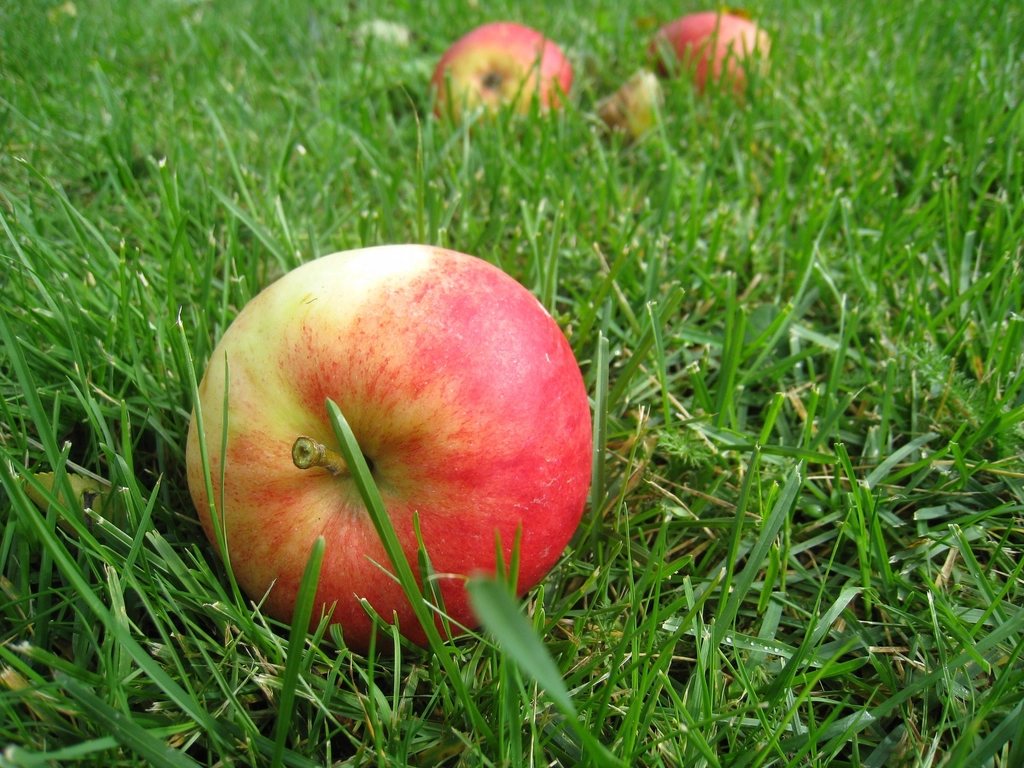
Somerset makes more cider than any other county in England, and it has done so for as long as anyone has kept records. Most of it now comes from a handful of large producers, but scattered across the Levels, the Vale of Taunton and the foothills of the Mendips and the Quantocks are the farms that never stopped: a few acres of old standard trees, a press in a stone shed, a row of barrels, and a spare bedroom or a converted cart-house let to visitors. A stay on one of them is a stay in a working year, and the year has three moments that are worth planning a visit around. This is what each one is like.
October: the harvest and the smell of it
Cider apples ripen later than eating apples. The early varieties drop in late September, the main crop comes down through October, and the bittersweets that give Somerset cider its body may hang on into November. On a traditional farm the fruit is not picked but gathered: shaken from the trees with a long pole or a tractor-mounted shaker, left on the grass for a few days to finish ripening, then raked and scooped into trailers. The work is heavy and it goes on from first light while the weather holds. As a guest you will wake to the tractor, walk out into an orchard that smells sweetly of bruised fruit, and find the wasps have had the same idea. Wear boots, because the grass under old trees is long and the ground is wet. Ask if you can help; most farms will hand you a rake and be glad of it, and an hour of gathering earns a glass of last year’s cider at dusk more honestly than any purchase.
November: the press, the cheese and the cloths
Pressing follows the harvest and can run from October into December, but November is the heart of it. The apples are milled into a coarse pulp, and the pulp is built up on the press in layers wrapped in cloth, each layer a few inches thick, the whole stack known, confusingly, as a cheese. When the cheese is complete the press comes down and the juice runs into a trough and from there into barrels, where it will ferment with nothing added through the winter. The shed is cold, the floor is wet, the work is rhythmic and quiet, and a guest who stands out of the way will be left to watch for as long as they like. Some farms let you taste the juice straight from the press, sweet and cloudy and nothing like the finished drink. The pressed pulp, or pomace, goes out to the cattle or back onto the orchard, and the smell of it, sharp and slightly vinegary, hangs about the yard for weeks. Bring clothes you do not mind smelling of apples for the rest of the week.
January: the wassail and the oldest tree
The third moment is the strangest and the one most worth the journey. The wassail is the blessing of the orchard for the coming year, and in Somerset it is held on Old Twelfth Night, the seventeenth of January, the date that Twelfth Night fell on before the calendar was moved by eleven days in 1752. The village at the foot of Exmoor that has kept the custom longest holds it on that evening every year, and dozens of farms and pubs across the county do the same on the nearest weekend. The pattern is much the same everywhere. After dark the company walks into the orchard with lanterns and a bucket of mulled cider. Toast soaked in cider is pushed into the branches of the oldest tree for the robins, which are the good spirits of the orchard. Cider is poured over the roots. Everyone sings the wassail song, and then there is as much noise as the village can make, with pans, whistles and shotguns fired into the branches to wake the tree and frighten off anything that might harm it. Then there is more cider. A guest at a farm that wassails will be invited, will be handed a mug, and will be expected to sing.
What a cider-farm stay is actually like
Between those three moments the farm is quieter but never idle, and the stay has a character of its own. A few things hold true on most of them.
- The house is a farmhouse first: early mornings, muddy porches, a kitchen that is the centre of everything.
- The orchard is the garden. Walk in it whenever you like, but leave the fallen fruit where it is in autumn, since it is the crop.
- There will be cider on the table, and it will be stronger than you expect, often six to eight per cent. Pace yourself.
- Old orchards are full of mistletoe in winter and blossom in May, and the farm will not mind if you come back for either.
- The Levels flood between November and March. Ask about the lanes before a January visit.
- Some farms sell cider at the gate, in general terms by the bottle or the container you bring; ask about the hours.
The trees themselves
It is worth learning a little about what you are walking under. Traditional orchards are planted with standard trees, tall, widely spaced and often a century old, grazed beneath by sheep or cattle. Newer bush orchards are low and dense and easier to harvest by machine, and a farm that has both will show you the difference at once. The varieties have names that sound like a Somerset field map: bittersweets that make up most of a blend, sharps that give it edge, and a few old favourites that a farmer will point out with something close to affection. Many are found nowhere else. A good host will walk you round, tell you which tree crops every other year and which one the wassail is sung to, and send you home knowing more about apples than you thought there was to know.
Choosing your moment
For a single visit, the third week of January is the time to go, for the wassail, accepting the mud and the short days as the price. The orchard in the dark, the lanterns, the shotguns and the song are as close as modern Somerset gets to something genuinely old, and a visitor is welcomed into it without fuss. A second visit could add an October weekend for the gathering and the light. The pressing, for all its interest, is the one to leave until you know the farm and can time it by a phone call rather than a calendar. Whichever you choose, book early, bring boots, and do not plan to drive anywhere after supper.